Tonight, God blessed our family by sending us a little angel named Emma Renee Orendorff. She checked in at 4 pounds 11 ounces and 19 inches long. Both Emma and her mom are doing well, but the story doesn't end there.
It is possible that Emma has Down Syndrome. There was no advance diagnosis, so this news sort of struck us like a bolt out of the blue. She will have to have some tests to confirm if she actually has Down or not, but the medical staff seems to think it is a strong possibility at this point.
I hope everyone understands that this is not a request for pity or sympathy. Our family has dealt with this before and we don't view this as something horrible or sad. It happens, plain and simple. There is no cure, but there is also no earthly reason why a person with Down can not live a perfectly normal, happy life.
As many of you know, my oldest and best friend Doug has Down. Yesterday, he celebrated his 56th birthday and his 51st since we have been friends. Doug and I went to Kindergarten together and have remained pals ever since. Some of you may recall reading of our exploits with the Space Shuttle a couple of years ago.
Moments ago, I learned that my dear sweet friend Polly lost her battle with cancer. Words fail me. My heart goes out to John and Beck, James, Sarah, Aunt Sue and the rest of Polly's loving family. There are big holes in many hearts tonight.
Wednesday, September 1, 2010


Saturday, July 17, 2010
Wake Up NASCAR
Does Carl Edwards actually have to kill someone on the track or in the stands before you get off your dead asses and take some serious action? This isn't a rivalry, this is pure, unadulterated stupidity. Wrecking a driver in front of the whole field on a restart? Are you kidding me?
This nitwit needs to be parked for the rest of this season and I think he should have to go before a review board of fellow drivers and owners before he is ever let on a race track again. Park him...before it is too late.
This nitwit needs to be parked for the rest of this season and I think he should have to go before a review board of fellow drivers and owners before he is ever let on a race track again. Park him...before it is too late.
Wednesday, June 30, 2010
Fireworks Photography
Once again, fireworks season is upon us. Everyone loves to watch a great fireworks display and many photographers would love to capture some memories of the event. Lots of folks are reluctant to even try shooting fireworks displays, because they have no idea where to begin....others hesitate to shoot because they are afraid to take their camera out of automatic mode....with any luck, the tips and techniques outlined here will help both novice and experienced shooters take their explosive shots to a whole new level.
The first step in shooting any fireworks display is a bit of preparation. Find out when and where the event is going to take place. Showing up at 10 pm for a display that took place at 9:30 is just as bad as showing up at the fairgrounds to shoot the show, only to discover event organizers decided the riverfront on the other side of town would make a better venue. Taking shots of an empty sky just doesn't hold much appeal. Some of us will be fortunate enough to live close to shoot more than one show...taking notes will help you keep the various displays in order and help you make sure you show up with the right stuff at the right place at the right time!
With camera in hand, scout your location before the show. If you are serious about shooting fireworks, you can make the time to look over the area where the show will take place. Make yourself aware of potential problems before they become an issue. Are there trees, power lines, buildings or even other people attending the event that are going to interfere with your line of sight and therefore, your ability to capture a clean image of the fireworks? Are there powerful external light sources that are going to foul your exposures and wash out the images? Setting up under a street light might make the job of assembling your equipment simpler, but it is not going to be a good thing when it comes to the finished image. Get away from bright lights, utility poles and wires. Trees and buildings can add interest to your finished image, but make sure they will not block the shots. Since most of us won't be shooting with the Statue of Liberty or other famous landmarks as potential focal points, look for locations where the buildings will not dominate the image. Also keep in mind you will be carrying a bit of equipment with you, so finding parking in relation to the shooting locale can also be a major consideration...not to mention the time it will take to actually walk to your chosen vantage point. Plan accordingly and leave yourself ample time to get set up.
Once you decide where you are going to shoot from, it is time to move to the next phase of preparation. Remember, a smart person would take their camera on the pre-show scouting expedition. This will allow you to look through the viewfinder and draw some conclusions about which lens you want to use. Are you going to be close in where a wide-angle lens is the best option? Is a medium telephoto a better choice or are you going to be far enough away the you can take advantage of a long telephoto? For those of you without an extensive selection of lenses, don't panic. You might just have to adjust your shooting location a little bit to properly complement your lens options. Once again, preparation is key. With this phase of the process complete, it is time to head home and prepare our gear for the show.
At home, it is time to start pulling the pieces together. Grab your small LCD flashlight and make sure it works. Make sure all your batteries are charged. Make sure your memory cards are clean, formatted and ready to go. Put fresh cards in your camera(s) before you pack them for the trip. Gather up your tripod(s) and make sure you have the necessary base plates ready if you are equipped with quick releases. Decide which lens(es) you are going to use and mount them to their respective body(bodies). If the lens has a filter on it, take it off. Filters are not your friend when shooting fireworks. Give the lens a good cleaning while you are at it, run the sensor clean function on the camera and give it a quick blow out with your rocket blower. Locate your remote cable release(s). If you have remotes that use batteries, make sure the batteries are not dead. If you are going to experiment with super long exposures/multiple exposures on one image, make sure you have your designated lens cover is ready to go. (Some use an opaque hat, I prefer a piece of heavy black fabric that I can drape over the lens) Set your camera controls for the mode you are going to be using. Most of us are going to use one of three modes....Aperture Value(Av), Manual, or Bulb. For most shooters, Manual will be the best choice...Bulb is best used by advanced shooters looking to experiment with varying exposures/multiple exposures and Av works best for shooting really close in. Set your ISO to 100. Set your Aperture to at least f/8, most of us use f/11 or f/16...some will set it to the smallest aperture available. Set your shutter time to 5 seconds initially. Make sure your lens is set to Manual Focus mode. You can pre-focus if you want...set the focus to the little sideways L shaped mark just before the infinity symbol.(the one that looks like an 8 turned sideways.) The last two items on my list are optional, but a must for me. My wife typically accompanies me, so we toss in a couple of lawn chairs and a small cooler for soda, water or iced tea.
The time has come to load the car and head for the show. Make sure you have everything we have discussed up to this point loaded and ready to go. Give yourself more than ample time to arrive at your destination. Bear in mind that this is typically a holiday and traffic is going to be heavy. If you have done your homework properly, you should be able to locate a decent parking spot and get your equipment to the shoot locale with a minimum of hassle. I have been shooting shows long enough that I know many locations that I can park and shoot from the same spot. That makes life much easier! Set up your tripod(s), attach the camera(s) and remote shutter release(s). Aim your camera in the general direction of the launch point. Make sure your lens is in manual focus mode and if you have enough light available, try to focus on a subject in the launch area...(setting lens to infinity doesn't always work folks...depending on where you are shooting from, your focus may need to be on an area much closer to the camera) Even if you have previously watched or shot fireworks from this location, you will probably have to wait for the initial shot to get the exact location you need to aim your camera.
Your first shoot is probably going to end up being a grand experiment. Shoot in the best mode for the distance...I use 3 shooting modes depending on my proximity to the fireworks. Here are the parameters I start with and a range of distances. Don't feel that you are locked in to these values...these are just starting points. Fireworks allow you to experiment. Trying a variety of settings can help you catch that "special" shot. Don't forget, most shows last 15-20 minutes so you have some time to hone your settings to the optimum values.
Close-in: Less than 200 yards from the launch point. I shoot with the camera in Av Mode. ISO 100 @f/8...this will give you a full frame of burst, which produces ample light for the camera to meter and calculate an exposure. If you want to go manual...try shutter speeds in the 1/15 to 1/4 second range to start. I typically use zoom lenses at this range. I have access to a 16-35mm, 17-40mm, 24-70mm, a 24-105mm and 28-135mm lens, experience has shown me that at this range, you are typically shooting at focal lengths shorter than 28mm....so any lens you have that covers from 10-28mm should work just fine.
Mid-range: From 200 yards to about 1/2 mile, try ISO 100 @f/8 and 1-2 seconds in manual mode as a starting point, adjust as necessary. Here we find ourselves using lenses such as the 24-70mm, 24-105mm, 28-135mm and even the 70-200mm. Depending on the framing of the shot you desire, you can adjust your zoom accordingly. I have shot at every focal length from 24-200mm at this range with excellent results. Play with your settings until you are happy!
Long-range: Shots taken from over 1/2 mile away, try ISO 100 @f/11 and 10-15 second exposures in bulb mode. This is also the mode where I just lock the shutter open and use my black cloth drape to limit the exposure/allow multiple bursts to appear in the same image. Again, I have used lenses in focal lengths ranging from 24mm to 400mm depending on the desired framing.
For examples and EXIF data see this gallery: Fireworks Images
Keep in mind, that these are just tips and guidelines. How you actually decide to shoot is entirely up to you. Experiment and have fun. There is no right or wrong way to shoot fireworks, unless you are turning out blank images....(dang it, I told you to take the lens cap off!) Processing the images after the show gives you a whole new way to interpret the shots....again...there is no right and wrong....do what makes the shot look the best to you. (Fractalius is a fun little program to play with on fireworks shots.) One last bit of advice, don't tie yourself in a knot trying to get the "perfect" shot....there isn't a tremendous market for fireworks photographs...if you are thinking you are going to get rich selling your images....you are in for big surprise. Media outlets grab up a few stellar shots each year, but that is about the extent of the market. Shoot for yourself first! And shoot because you enjoy the challenge!

Good luck and happy shooting!
The first step in shooting any fireworks display is a bit of preparation. Find out when and where the event is going to take place. Showing up at 10 pm for a display that took place at 9:30 is just as bad as showing up at the fairgrounds to shoot the show, only to discover event organizers decided the riverfront on the other side of town would make a better venue. Taking shots of an empty sky just doesn't hold much appeal. Some of us will be fortunate enough to live close to shoot more than one show...taking notes will help you keep the various displays in order and help you make sure you show up with the right stuff at the right place at the right time!
With camera in hand, scout your location before the show. If you are serious about shooting fireworks, you can make the time to look over the area where the show will take place. Make yourself aware of potential problems before they become an issue. Are there trees, power lines, buildings or even other people attending the event that are going to interfere with your line of sight and therefore, your ability to capture a clean image of the fireworks? Are there powerful external light sources that are going to foul your exposures and wash out the images? Setting up under a street light might make the job of assembling your equipment simpler, but it is not going to be a good thing when it comes to the finished image. Get away from bright lights, utility poles and wires. Trees and buildings can add interest to your finished image, but make sure they will not block the shots. Since most of us won't be shooting with the Statue of Liberty or other famous landmarks as potential focal points, look for locations where the buildings will not dominate the image. Also keep in mind you will be carrying a bit of equipment with you, so finding parking in relation to the shooting locale can also be a major consideration...not to mention the time it will take to actually walk to your chosen vantage point. Plan accordingly and leave yourself ample time to get set up.
Once you decide where you are going to shoot from, it is time to move to the next phase of preparation. Remember, a smart person would take their camera on the pre-show scouting expedition. This will allow you to look through the viewfinder and draw some conclusions about which lens you want to use. Are you going to be close in where a wide-angle lens is the best option? Is a medium telephoto a better choice or are you going to be far enough away the you can take advantage of a long telephoto? For those of you without an extensive selection of lenses, don't panic. You might just have to adjust your shooting location a little bit to properly complement your lens options. Once again, preparation is key. With this phase of the process complete, it is time to head home and prepare our gear for the show.
At home, it is time to start pulling the pieces together. Grab your small LCD flashlight and make sure it works. Make sure all your batteries are charged. Make sure your memory cards are clean, formatted and ready to go. Put fresh cards in your camera(s) before you pack them for the trip. Gather up your tripod(s) and make sure you have the necessary base plates ready if you are equipped with quick releases. Decide which lens(es) you are going to use and mount them to their respective body(bodies). If the lens has a filter on it, take it off. Filters are not your friend when shooting fireworks. Give the lens a good cleaning while you are at it, run the sensor clean function on the camera and give it a quick blow out with your rocket blower. Locate your remote cable release(s). If you have remotes that use batteries, make sure the batteries are not dead. If you are going to experiment with super long exposures/multiple exposures on one image, make sure you have your designated lens cover is ready to go. (Some use an opaque hat, I prefer a piece of heavy black fabric that I can drape over the lens) Set your camera controls for the mode you are going to be using. Most of us are going to use one of three modes....Aperture Value(Av), Manual, or Bulb. For most shooters, Manual will be the best choice...Bulb is best used by advanced shooters looking to experiment with varying exposures/multiple exposures and Av works best for shooting really close in. Set your ISO to 100. Set your Aperture to at least f/8, most of us use f/11 or f/16...some will set it to the smallest aperture available. Set your shutter time to 5 seconds initially. Make sure your lens is set to Manual Focus mode. You can pre-focus if you want...set the focus to the little sideways L shaped mark just before the infinity symbol.(the one that looks like an 8 turned sideways.) The last two items on my list are optional, but a must for me. My wife typically accompanies me, so we toss in a couple of lawn chairs and a small cooler for soda, water or iced tea.
The time has come to load the car and head for the show. Make sure you have everything we have discussed up to this point loaded and ready to go. Give yourself more than ample time to arrive at your destination. Bear in mind that this is typically a holiday and traffic is going to be heavy. If you have done your homework properly, you should be able to locate a decent parking spot and get your equipment to the shoot locale with a minimum of hassle. I have been shooting shows long enough that I know many locations that I can park and shoot from the same spot. That makes life much easier! Set up your tripod(s), attach the camera(s) and remote shutter release(s). Aim your camera in the general direction of the launch point. Make sure your lens is in manual focus mode and if you have enough light available, try to focus on a subject in the launch area...(setting lens to infinity doesn't always work folks...depending on where you are shooting from, your focus may need to be on an area much closer to the camera) Even if you have previously watched or shot fireworks from this location, you will probably have to wait for the initial shot to get the exact location you need to aim your camera.
Your first shoot is probably going to end up being a grand experiment. Shoot in the best mode for the distance...I use 3 shooting modes depending on my proximity to the fireworks. Here are the parameters I start with and a range of distances. Don't feel that you are locked in to these values...these are just starting points. Fireworks allow you to experiment. Trying a variety of settings can help you catch that "special" shot. Don't forget, most shows last 15-20 minutes so you have some time to hone your settings to the optimum values.
Close-in: Less than 200 yards from the launch point. I shoot with the camera in Av Mode. ISO 100 @f/8...this will give you a full frame of burst, which produces ample light for the camera to meter and calculate an exposure. If you want to go manual...try shutter speeds in the 1/15 to 1/4 second range to start. I typically use zoom lenses at this range. I have access to a 16-35mm, 17-40mm, 24-70mm, a 24-105mm and 28-135mm lens, experience has shown me that at this range, you are typically shooting at focal lengths shorter than 28mm....so any lens you have that covers from 10-28mm should work just fine.
Mid-range: From 200 yards to about 1/2 mile, try ISO 100 @f/8 and 1-2 seconds in manual mode as a starting point, adjust as necessary. Here we find ourselves using lenses such as the 24-70mm, 24-105mm, 28-135mm and even the 70-200mm. Depending on the framing of the shot you desire, you can adjust your zoom accordingly. I have shot at every focal length from 24-200mm at this range with excellent results. Play with your settings until you are happy!
Long-range: Shots taken from over 1/2 mile away, try ISO 100 @f/11 and 10-15 second exposures in bulb mode. This is also the mode where I just lock the shutter open and use my black cloth drape to limit the exposure/allow multiple bursts to appear in the same image. Again, I have used lenses in focal lengths ranging from 24mm to 400mm depending on the desired framing.
For examples and EXIF data see this gallery: Fireworks Images
Keep in mind, that these are just tips and guidelines. How you actually decide to shoot is entirely up to you. Experiment and have fun. There is no right or wrong way to shoot fireworks, unless you are turning out blank images....(dang it, I told you to take the lens cap off!) Processing the images after the show gives you a whole new way to interpret the shots....again...there is no right and wrong....do what makes the shot look the best to you. (Fractalius is a fun little program to play with on fireworks shots.) One last bit of advice, don't tie yourself in a knot trying to get the "perfect" shot....there isn't a tremendous market for fireworks photographs...if you are thinking you are going to get rich selling your images....you are in for big surprise. Media outlets grab up a few stellar shots each year, but that is about the extent of the market. Shoot for yourself first! And shoot because you enjoy the challenge!

Quick Tips
1. Scout your location.
2. Assemble your gear. Charge batteries, clear cards, remove filters..
3. Pack car....make sure you have everything, Including spares.
4. Travel to shoot...leave ample time....arrive early.
5. Get set up. Mount lens camera, put camera and lens on tripod. Connect remote or cable release.
6. Place camera in desired shooting mode...Av, M, or B are your primary options....you can experiment with Tv if you are bold.
7. Select your desired aperture....start at f/8 and experiment. (I more commonly use f/11 - f/16)
8. ISO 100 for starters.
9. Pre-focus your camera on a feature near the launch site for the fireworks. Make sure your camera is set to manual focus. (AF will work, but it tends to be very hit and miss.)
10. Once the display begins, use the first couple of shots to review your focus and exposure.
11. If you are satisfied with your focus, you can now experiment with your exposure....try various time intervals from 1 to 15 seconds. Review the shots until you start seeing results you are content with.
12. You can now work on fine tuning image quality:
* If your initial settings give you an image that is too dark (under-exposed), you can increase the ISO setting, increase the length of time your shutter is open or enlarge the aperture on the lens. (Adjust one variable at a time, review your image. Continue adjustments as necessary.)
* You can increase the ISO if the fireworks appear to be too dim. (Go easy, you want to keep the noise levels down.
* If you are including background features and they appear to dim, you can once again increase the ISO. (See previous post)
* If your background appears too bright, you can stop down the aperture 1 stop or reduce the length of time the shutter is open.
* If everything appears to be over-exposed, close down the aperture 1 stop at a time or decrease the length of time the shutter is open or if you have previously upped the ISO setting, you may decrease that.
13. Once you are satisfied with your settings, simply repeat the process with each new launch. Enjoy the show and remember to have fun!
Good luck and happy shooting!
Saturday, June 26, 2010
Karma
As many of you know, I spent a number of years in emergency service. Along the way, I had an idea for a "better mousetrap" to assist rescue personnel in performing their jobs in a faster and safer fashion. Realizing that I had neither the time nor the equipment necessary to manufacture this item, I chose to share the idea with a long time friend that just happened to have the key components that I was lacking.
After countless hours of discussion, fabrication and experimentation, a prototype was developed, which I then took to the field to give some real world testing and experience. By virtue of my job, the "mousetrap" got some remarkable hands-on experience....and the feedback allowed a variety of subtle changes to be made to refine and define the device. It wasn't long before the product was ready to be marketed to the rescue community as a quick, quiet, simple and stable safety innovation.
Shortly after the launch of the device to the rescue community, I was involved in an accident which would forever alter my life. I really had no idea at that point in time that I would never be able to go back to the job. It wasn't long after the accident that the other party involved in the "mousetrap" project showed up at my house. He thanked me profusely for all the hard work I had done on the project, but said he didn't think it would ever take off, particularly without my time and effort to show the device off and instruct people in the proper operation.
At that point in my life, I had to distance myself from the job that I was not going to be going back to, simply to maintain my own sanity. I had to focus on my life as it was going to be and not how it was. Needless to say, I didn't think much more about the strange visit, the possible death of an idea or anything beyond trying to get my own life back on track.
Flash forward to last week.....I am finally comfortable with dealing with the old job. I started doing some reading on rescue operations and was surprised to read a glowing review of my "mousetrap" from a respected national publication. Further research lead me back to the manufacturer's home page. There is much ado on the page about the company's Christian values and integrity. Imagine my surprise to learn that the idea for the "mousetrap" came to my friend "in a dream". The dream showed him the need for the device, the exact components needed and why it was almost a miracle! Seems a wee bit odd to be extolling the virtues of high moral fiber, honesty and Christian belief while stabbing a "friend" in the back.
Don't get me wrong. I'm not as bitter as I sound, I just think it is wrong to refer to the person responsible for this as "a dream". What is really important is the fact that emergency responders now have a very capable, very affordable tool in their arsenal....which makes the job of saving lives much safer and faster. I wish them all the luck in the world and hope that many lives are saved as a result.
After countless hours of discussion, fabrication and experimentation, a prototype was developed, which I then took to the field to give some real world testing and experience. By virtue of my job, the "mousetrap" got some remarkable hands-on experience....and the feedback allowed a variety of subtle changes to be made to refine and define the device. It wasn't long before the product was ready to be marketed to the rescue community as a quick, quiet, simple and stable safety innovation.
Shortly after the launch of the device to the rescue community, I was involved in an accident which would forever alter my life. I really had no idea at that point in time that I would never be able to go back to the job. It wasn't long after the accident that the other party involved in the "mousetrap" project showed up at my house. He thanked me profusely for all the hard work I had done on the project, but said he didn't think it would ever take off, particularly without my time and effort to show the device off and instruct people in the proper operation.
At that point in my life, I had to distance myself from the job that I was not going to be going back to, simply to maintain my own sanity. I had to focus on my life as it was going to be and not how it was. Needless to say, I didn't think much more about the strange visit, the possible death of an idea or anything beyond trying to get my own life back on track.
Flash forward to last week.....I am finally comfortable with dealing with the old job. I started doing some reading on rescue operations and was surprised to read a glowing review of my "mousetrap" from a respected national publication. Further research lead me back to the manufacturer's home page. There is much ado on the page about the company's Christian values and integrity. Imagine my surprise to learn that the idea for the "mousetrap" came to my friend "in a dream". The dream showed him the need for the device, the exact components needed and why it was almost a miracle! Seems a wee bit odd to be extolling the virtues of high moral fiber, honesty and Christian belief while stabbing a "friend" in the back.
Don't get me wrong. I'm not as bitter as I sound, I just think it is wrong to refer to the person responsible for this as "a dream". What is really important is the fact that emergency responders now have a very capable, very affordable tool in their arsenal....which makes the job of saving lives much safer and faster. I wish them all the luck in the world and hope that many lives are saved as a result.
Saturday, May 29, 2010
Memorial Day
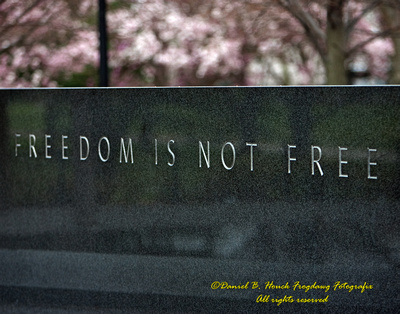
Many folks view this weekend as simply the unofficial start of summer, a time to fire up the grills, dust off the patio furniture and enjoy the great outdoors with family and friends. All of those activities are fantastic ways to enjoy the warmth of late spring, but none of them could take place as we know them without the sacrifices made by our brave men and women in uniform.
Originally known as Decoration Day, the Memorial Day holiday first commemorated the deaths of soldiers from the American Civil War. Flowers or wreaths were placed on the graves, followed by singing, sermons and then a picnic. First celebrated in Waterloo, NY on May 5, 1866, the holiday gained national prominence as a result of the friendship between General John Murray of Waterloo and General John Logan, Commander in Chief of one of the earliest veteran's organizations, the Grand Army of the Republic. On May 5, 1868 Logan proclaimed May 30 Decoration Day...to be celebrated annually in honor of those who made the supreme sacrifice.
The name Memorial Day came into use in 1882, but it wasn't until after WWII that it gained widespread acceptance. In 1967, federal law officially amended the name to Memorial Day. In 1968, the Uniform Holidays Bill established a series of three day weekend holidays and Memorial Day was officially designated as the last Monday in May. Many people feel that the rotating date and three day weekend status has cheapened the holiday. There is currently a push among veterans' groups to have Memorial Day restored to a single day event, celebrated on the traditional May 30th date.
Tradition has the American flag flown at half-staff from dawn until noon. During this time many communities and veterans' groups hold parades and ceremonial wreath layings, followed by the playing of Taps and a 21-gun salute. At 3 p.m. local time, a national moment of remembrance is held. Many veterans wear a poppy on Memorial Day in honor of the WWI veterans commemorated in the John McCrae poem "In Flanders Fields"
Enjoy your start of summer picnics, family gatherings and social happenings...enjoy the traditional Indianapolis 500 and Coca-Cola 600, baseball games and other sporting events. Just don't forget to take time out of your busy schedule remember the real reason why you are celebrating the day. You might not be able to attend a tribute at one of our many National Cemeteries, you might not even be able to attend a local memorial ceremony, but please take a moment to remember those who gave their all to protect our rights and freedoms.
Originally known as Decoration Day, the Memorial Day holiday first commemorated the deaths of soldiers from the American Civil War. Flowers or wreaths were placed on the graves, followed by singing, sermons and then a picnic. First celebrated in Waterloo, NY on May 5, 1866, the holiday gained national prominence as a result of the friendship between General John Murray of Waterloo and General John Logan, Commander in Chief of one of the earliest veteran's organizations, the Grand Army of the Republic. On May 5, 1868 Logan proclaimed May 30 Decoration Day...to be celebrated annually in honor of those who made the supreme sacrifice.
The name Memorial Day came into use in 1882, but it wasn't until after WWII that it gained widespread acceptance. In 1967, federal law officially amended the name to Memorial Day. In 1968, the Uniform Holidays Bill established a series of three day weekend holidays and Memorial Day was officially designated as the last Monday in May. Many people feel that the rotating date and three day weekend status has cheapened the holiday. There is currently a push among veterans' groups to have Memorial Day restored to a single day event, celebrated on the traditional May 30th date.
Tradition has the American flag flown at half-staff from dawn until noon. During this time many communities and veterans' groups hold parades and ceremonial wreath layings, followed by the playing of Taps and a 21-gun salute. At 3 p.m. local time, a national moment of remembrance is held. Many veterans wear a poppy on Memorial Day in honor of the WWI veterans commemorated in the John McCrae poem "In Flanders Fields"
In Flanders Fields
By: Lieutenant Colonel John McCrae, MD (1872-1918)
Canadian Army
In Flanders Fields the poppies blow
Between the crosses row on row,
That mark our place; and in the sky
The larks, still bravely singing, fly
Scarce heard amid the guns below.
We are the Dead. Short days ago
We lived, felt dawn, saw sunset glow,
Loved and were loved, and now we lie
In Flanders fields.
Take up our quarrel with the foe:
To you from failing hands we throw
The torch; be yours to hold it high.
If ye break faith with us who die
We shall not sleep, though poppies grow
In Flanders fields.
Enjoy your start of summer picnics, family gatherings and social happenings...enjoy the traditional Indianapolis 500 and Coca-Cola 600, baseball games and other sporting events. Just don't forget to take time out of your busy schedule remember the real reason why you are celebrating the day. You might not be able to attend a tribute at one of our many National Cemeteries, you might not even be able to attend a local memorial ceremony, but please take a moment to remember those who gave their all to protect our rights and freedoms.
Subscribe to:
Posts (Atom)